
BLOG
A Guide to Air Freight Prohibited Items


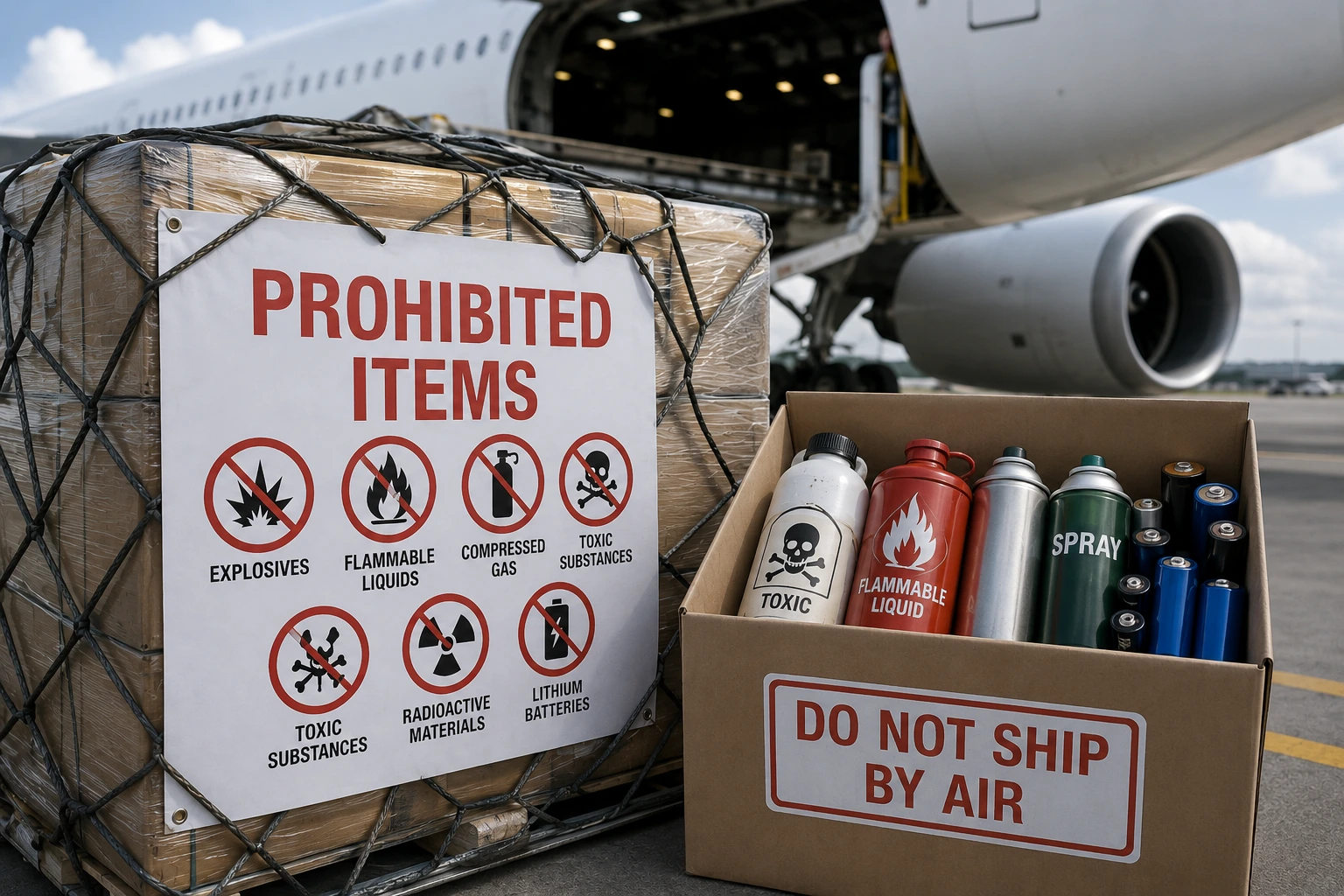
In today’s fast-paced environment of global trade environment, air freight remains the gold standard for speed & reliability. Dubai, a global logistics hub, is a competitive market for businesses that are willing to move their goods across borders swiftly in hours rather than weeks. But that speed comes with several complex sets of rules and regulations from IATA and Dubai customs. In sea cargo, flexibility is achieved through large volumes and varied stability. Air cargo follows safety standards set by authorities, due to the unique pressures and altitudes involved in a flight.
A single “prohibited item” can cause more than minor inconveniences in shipment. High fines, grounded cargo, blacklisting by carriers, and the most extreme – legal prosecution from UAE customs, all of this causes significant damage to your brand’s reputation. From shipping high-tech electronics to specialized chemicals, understanding the nuances of air cargo restrictions is the first step toward a seamless supply chain.
What are Air Freight Prohibited Items?
Items that pose a risk to the aircraft, passengers, or environment due to their chemical or physical properties are considered Prohibited items in air freight. Under IATA Dangerous Goods Regulations (DGR), these typically include explosives, flammable gases/ liquids, radioactive materials, and lithium batteries. In Islamic countries like Dubai, additional restrictions apply due to UAE security laws, Islamic values, and their core cultural beliefs.
Why Air Freight Restrictions Matter for Dubai Shippers?
Handling operations from Dubai means navigating through both international standards set by the International Air Transport Association (IATA) and local regulatory authorities like Dubai Customs and General Civil Aviation Authorities (GCAA).
Unlike sea freight, Air freight is highly sensitive to changes in atmospheric pressure and vibrations, which can significantly affect the integrity and quality of cargo during transport. A harmless liquid on a cargo ship can cause a volatile hazard at 30,000 feet. When one non-compliant box can halt an entire export operation, a right freight forwarding company in Dubai ensures your air safety standards to avoid freight rejection.
Understanding the Difference Between: Prohibited vs. Restricted Items
While transporting, understanding the difference between flatly banned items and merely restricted goods is important for your business.
- Prohibited Items: These are items that are dangerous and strictly banned by authorities like IATA due to extreme safety, security, or legal concerns.
Restricted Goods: These are items or goods that require special handling, permits, or packaging. These goods can fly, but under strict regulations from the authorities.
Common Categories of Prohibited and Restricted Goods
International regulations categorise hazardous materials into distinct classes. Some of them are outright banned, but several are restricted.
-
1. Explosives and Flammable Materials
This is the most strictly monitored category, which includes items that can ignite or explode under pressure or heat. These items are prohibited on passenger aircraft and heavily restricted on freighters.a. Prohibited Items: Fireworks, ammunition, signal flares, and gunpowder.
b. Restricted Items/Liquids: Fuel, certain paints, adhesives, and strike-anywhere matches. -
2. Compressed Gases
Gases stored under pressure can expand rapidly during flight. If a container fails, it can act as a projectile that can cause an explosion.a. Common Gas Containers: Aerosol cans (hairspray, spray paint), propane tanks, and even CO2 cartridges for soda machines.
-
3. Lithium Batteries
Lithium-ion and lithium-metal batteries are a top priority for air freight safety compliance. Because they can overheat and cause “thermal runaway” fires that are difficult to extinguish, they are subject to strict Watt-hour limits. -
4. Toxic and Infectious Substances
Anything that could harm humans or the environment if leaked is high-risk. (For eg, pesticides, mercury, arsenic, and medical waste). -
5. Magnetized Materials
Large magnets or industrial equipment with powerful magnetic fields are tested and shielded, due to their interference with an aircraft’s navigation system. -
Dubai-Specific – Air Freight Prohibited ItemsApart from global safety standards, Shipping from or to the UAE involves legal compliance and local culture. Dubai Customs keeps a strict list of items that are prohibited from entering the country.
Religious and culturally sensitive items: Materials, publications, or artworks that contradict Islamic teachings and morals.
Controlled Substances: Highly regulated medicines (certain sedatives or codeine-based products) require prior MoH (Ministry of Health) approval.
Security Goods: Firearm replicas, stun devices, and certain types of drones.
Banned Goods (Origin-Based): Items manufactured in countries currently under the UAE boycott.How to Avoid Shipment Rejections and Air Cargo Restrictions
Most shipments in Dubai are rejected, not because they are inherently evil, but because of poor preparation. -
- Accurate Documentation: The Shipper’s Declaration of Dangerous Goods (DGD) and the Air Waybill must be flawless. Pre-arrange your customs clearance in Dubai by providing accurate HS codes and detailed product descriptions.
- Specialized Packaging: Use Performance Oriented Packaging (POP) that has passed pressure and drop tests while transporting hazardous materials via air cargo.
- Partner with a Knowledgeable Forwarder: An air freight forwarding company similar to Verden Logistics in Dubai acts as your compliance filter that reviews your Material Safety Data Sheets before the cargo even leaves your warehouse.
-
Conclusion: Partner with ExpertiseNavigating rigid air cargo restrictions doesn’t have to become a hurdle for your business growth. Whether you are shipping retail goods or high-tech components, a partner that stays ahead of the regulatory curve ensures your success. Staying informed about the latest IATA regulations and UAE customs laws can turn your compliance into a tool for greater efficiency.
-
At Verden Logistics, we provide expertise that moves your business forward by handling the complexities of aviation safety compliance and customs clearance in Dubai. We ensure that your shipment is 100% complaint, safe, and on time. Our vast global network ensures a seamless logistics support that prioritises safety and customer satisfaction.
-
For A Comprehensive Cargo Audit, Contact Verden Logistics Today.
-
-
FAQs (Frequently Asked Questions)
1. Can I ship perfumes by air freight from Dubai?
Ans.:- Perfumes contain alcohol and are classified as “Flammable Liquids.” They are restricted, not prohibited. If they can meet specific volume limits per bottle and are packed as “Dangerous Goods in Limited Quantities”, they can be shipped.2. What if my shipment gets rejected due to a prohibited item?
Ans.:- If an item is found during screening, it will be confiscated, and the shipper may face significant fines. The carrier may also charge a “hazardous material handling fee” or return the entire shipment at the shipper’s expense.3. Why was my shipment rejected even though it wasn’t “dangerous”?
Ans.:- Due to inadequate packaging or paperwork errors, a rejection might happen. If a liquid leaks (even if it’s just water) or a box looks unstable, the airline will reject it to protect other cargo. -